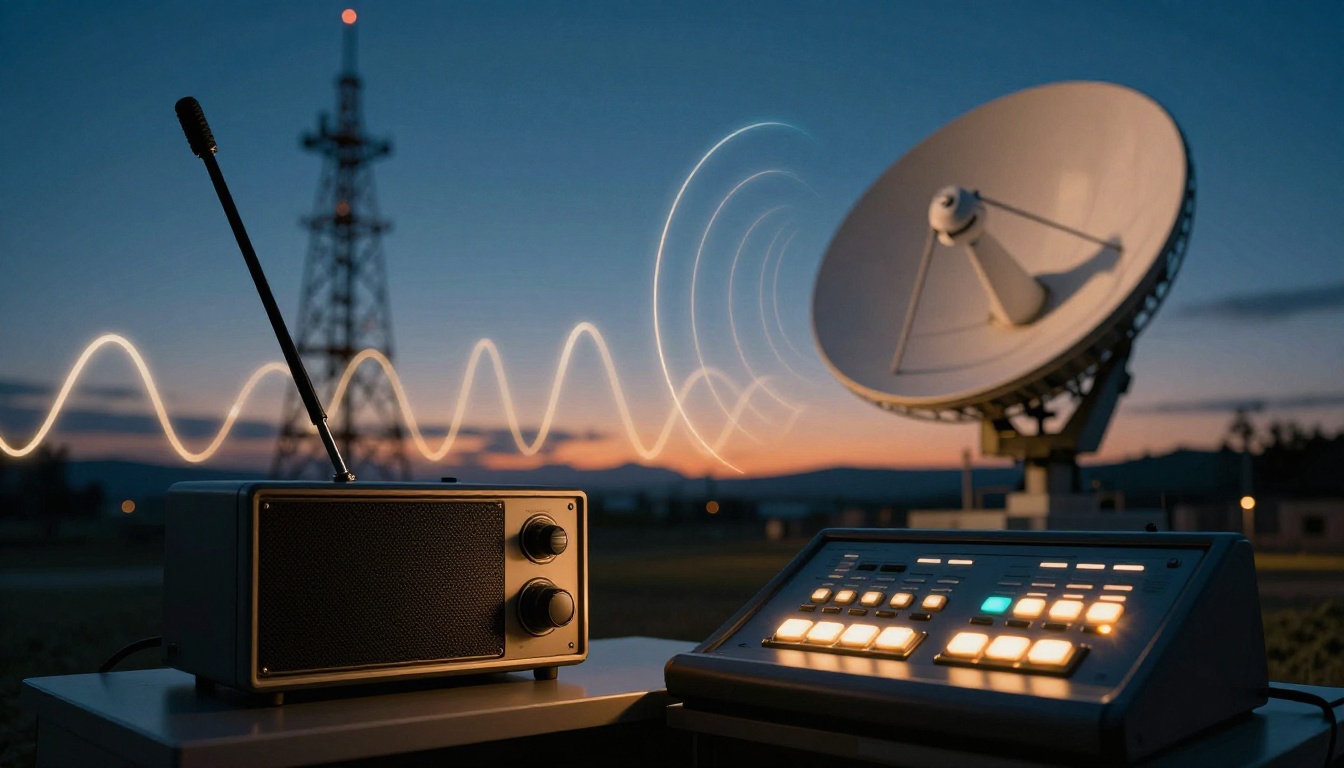
Have you ever tuned into a live sports game, then realized everyone within range was hearing the same play-by-play? That shared experience is the heart of broadcasting. In simple terms, it means sending audio or video from one source to many receivers at the same time.
You might notice it more during breaking news, big games, or elections. Still, broadcasting happens every day, in more formats than most people realize. Next, we’ll look at where it came from, the main types, and the basic steps that move signals from a studio to your device.
A Quick Look Back: Where Broadcasting Came From
Broadcasting didn’t start with streaming apps or flat-screen TVs. It began with radio waves, a new way to send messages through the air. In 1895, wireless radio research took off, and inventors soon proved that signals could travel farther than anyone expected.
One of the best-known early milestones involved Guglielmo Marconi. In 1897, Marconi sent what’s often described as the first major radio message across open water. You can read more about this breakthrough in Marconi’s first radio broadcast.
After that, radio grew fast. People loved the mix of music, news, and stories. In the early 1900s, stations mostly started as experiments and local transmissions. Then the idea of a single station reaching lots of listeners at once became a real product.
In the 1920s, radio moved from “cool science” to everyday entertainment. Families gathered around sets, like they were listening to a shared event. Meanwhile, the system got better at sending clear voices and more stable signals.
Television arrived later, but it built on radio’s foundation. Instead of only sending sound, TV added pictures. When TV took off in the 1930s and then expanded after World War II, it changed what people expected from home media. Shows weren’t just heard anymore, they were seen.
Then came the next big shift: cable and satellites. These helped stations reach wider areas without relying only on land-based towers. As a result, broadcasting turned more national and even global.
There’s also a fun word origin. The term “broadcast” connects to farming. Back then, seeds were scattered widely, not planted one by one. Broadcasting works the same way, in spirit: one message goes out broadly, so many people can receive it.
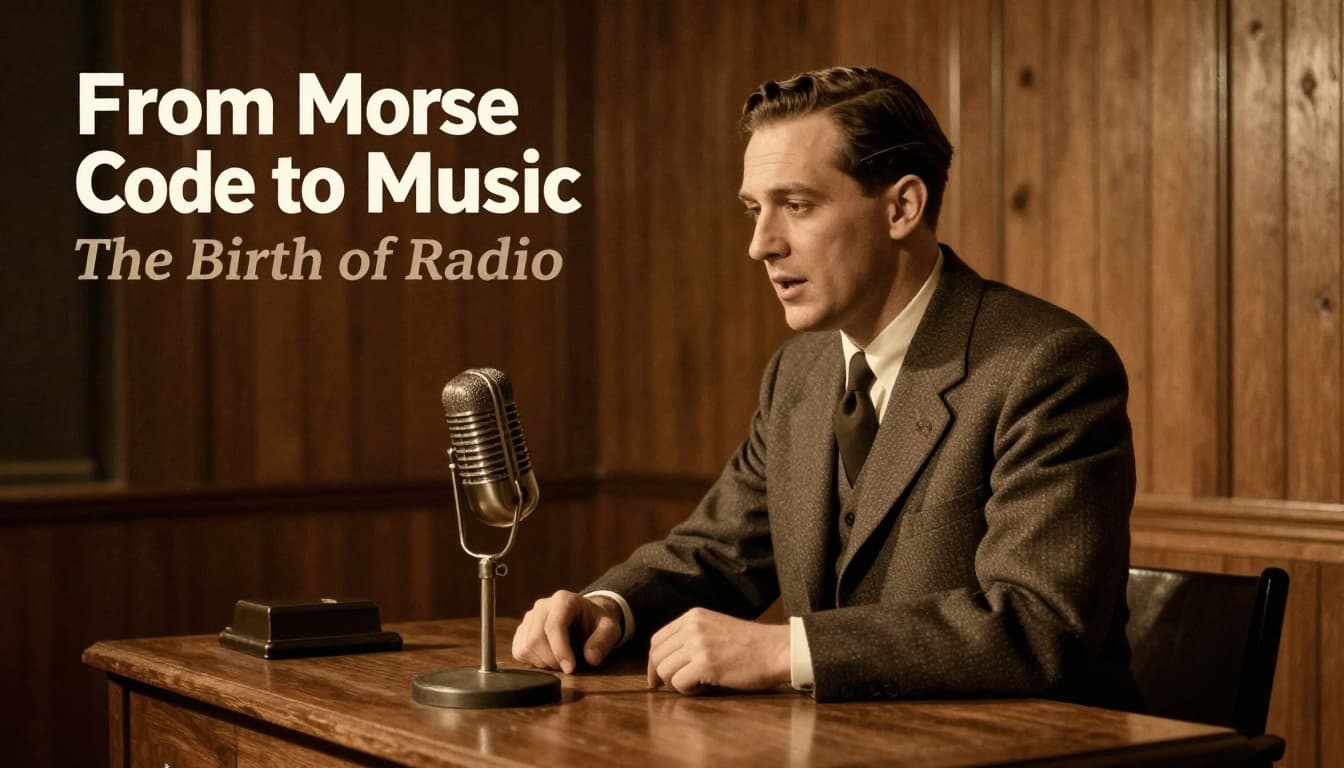
From Morse Code to Music: The Birth of Radio
Early radio wasn’t built for sitcoms and sports highlights. It started as a way to send signals over distance, including Morse code. Once researchers figured out how to send and detect more complex sounds, radio quickly became useful for news and entertainment.
In the 1920s, radio stations began experimenting with schedules that sounded like modern programming. Music shows came first in many areas, followed by talk, sports, and local announcements. Listeners didn’t have to request content. It was simply transmitted, and anyone tuned in could hear it.
Radio also helped people feel informed in real time. That mattered during weather events and major news. Instead of waiting for printed updates, audiences could hear reports as they happened.
Most importantly, radio proved the “one-to-many” model works. One transmitter sends. Many receivers listen. That basic structure still shows up today, even in streaming and podcasts, just with different delivery tech.
TV Takes the Stage: Adding Pictures to the Mix
Radio moved sound through the air. Television had to move sound and pictures together. That meant new equipment, new broadcast standards, and careful tuning.
When TV spread after the war, it gained momentum quickly. People wanted big-screen moments and live events. Advertisers wanted reach too, because TV could show products while a crowd watched the same show.
At first, many TV broadcasts were black and white. Then color arrived and changed viewing habits. Even now, you’ll see TV terms like “broadcast quality” tied to older standards, because the idea of consistent, wide delivery stuck around.
The Different Flavors of Broadcasting Explained
Not all broadcasting feels the same. Some broadcasts are loud and local. Others are national, and some show up on your phone. Still, the goal stays similar: send audio or video from one source to many receivers.
A simple way to remember it is by your everyday device habits. Radio often follows you outdoors or in the car. TV usually stays in the living room. Internet broadcasting reaches you wherever you have a connection.
Also, the lines can blur. Live sports might air on a traditional TV network, but you can often watch it as a stream too. That mix is part of modern media.
Here’s the core idea: broadcasting can be over the air, through cable, via satellite, or through the internet. The “one-to-many” part remains, even when the path changes.
Classic Radio: Sound Waves Filling the Air
Classic radio uses radio waves to send audio. A station creates programming in a studio. Then it sends the signal outward with a transmitter, usually from a tower.
Your receiver, like a car radio or home tuner, listens for the right frequency. If you tune correctly, you hear the station’s audio. If you’re far away or in bad reception areas, sound might get weaker or distorted.
Radio still matters because it’s practical. It’s easy to access. It can cover large areas with one tower. Plus, it works well for quick updates like traffic reports, weather alerts, and sports talk.
Even with streaming available, radio keeps a strong role. Many people still prefer it for local news and drive-time music. It’s also a great backup source when internet access slows down.
Television Broadcasting: Bringing Shows to Life on Screen
Television broadcasting sends both video and audio. It often uses towers, similar to radio, but the signal carries much more data. That includes the picture information and the sound.
As TV became common, the viewing pattern changed. People didn’t just listen, they watched together. That shared “watch window” is a big reason TV still feels special during major events.
Over time, TV improved. Picture quality got better, audio got clearer, and broadcasts became more reliable. In addition, standards evolved so stations could support higher resolutions and more channels.
Even when you stream TV today, the old TV model still influences scheduling and production. Many networks create content with a broadcast timetable in mind.
Digital and Online Broadcasting: Streaming Anywhere
When most people think of modern broadcasting, they think of streaming platforms. But broadcasting and streaming aren’t the exact same thing. They both send audio and video to many people, yet the delivery method differs.
A helpful way to compare the two is in Broadcasting vs Streaming: Key Differences in Livestream Technology. In general terms, classic broadcasting often pushes content from one source outward at the same time. Streaming typically sends data in chunks over the internet.
Streaming includes live video and also on-demand content. YouTube live streams, Netflix shows, and podcast apps all change how audiences find and watch content. Instead of tuning a frequency, you search, tap, and press play.
Still, “live” streaming events behave more like broadcasting. Many people watch the same thing at the same moment. That’s why big games and breaking news often show up on multiple platforms at once.
Behind the Scenes: How Broadcasting Signals Travel to Your Device
So how does broadcasting work when you press a remote button? Think of it like a message passing relay, with a few key steps.
First, a studio makes the content. That might be a sports announcer, a news desk, or a production team filming a show. Next, the signal gets converted into a form that can travel through a specific medium, like air, cable, satellite, or the internet.
Then, a transmitter sends it. Your receiver picks up the signal and turns it back into something you can hear and see.
If you want a mental image, picture waves in a pond. Toss one stone, and circles spread outward. Broadcasting spreads information outward too. The receiver just has to catch the right “circles.”
For a more detailed look at the flow, see How Broadcast Transmission Works: From Analog to Digital.
Key Parts That Make It All Happen
Several pieces work together from studio to receiver.
- Studio and production gear: Cameras, microphones, audio boards, and editing systems create the show or broadcast audio.
- Encoder and processing equipment: The signal gets compressed or prepared for sending. This step keeps it clear and efficient.
- Transmitter: This converts the processed signal into a broadcast form. It then sends the signal out at the right power and timing.
- Antennas and towers: For over-the-air broadcasting, towers radiate the signal so receivers can pick it up.
- Satellite link (when used): A satellite can relay the signal from one coverage area to another.
- Your receiver or tuner: The TV, radio, phone, or set-top box captures the broadcast and decodes it.
Here’s the simplest version of the path:
Create content → encode signal → transmit → travel to your area → receive and decode → play audio and video.
Analog Waves vs Digital Bits: Which Wins and Why
Old broadcasts used analog signals. That means the signal shape directly matches the original sound or picture changes. As distance increases, noise and interference can smear the signal.
Digital broadcasting uses data bits. Instead of copying the exact wave shape, it sends information in chunks. The receiver can correct more errors, so the result stays cleaner.
Here’s a quick comparison:
| Feature | Analog broadcasting | Digital broadcasting |
|---|---|---|
| Signal type | Continuous wave changes | Discrete data bits |
| Quality over distance | Can get fuzzy and noisy | Stays clearer with error correction |
| Interference impact | More noticeable | Often handled better |
| Channel flexibility | Limited options | More room for data and services |
In the US, many areas moved toward digital systems in the late 2000s and early 2010s. For a plain-language comparison of how they differ, check Digital vs Analog Radio System: Everything You Need to Know.
So why does this matter to you? Because digital can support clearer audio, better picture, and additional services. That’s why modern broadcasts often feel sharper than older ones.
The “win” isn’t just better picture. It’s better reliability, especially when signals travel far.
Ways Signals Get from Station to You
The broadcast path depends on the type of service.
Terrestrial broadcasting uses local towers. That’s the classic over-the-air approach. It’s common for local stations and many radio networks.
Satellite broadcasting works differently. A station sends the signal to a satellite, which then bounces it down to a wide coverage area. This helps when terrain or distance makes towers less practical.
Cable broadcasting sends signals through wires to your home. Instead of relying on an antenna, cable systems carry the feed to a set-top box or integrated TV receiver.
Internet broadcasting sends content as data streams. Your device requests the stream, then plays it as it arrives. For live events, it can be designed to handle huge audiences quickly.
In real life, you might switch between these without even thinking. For example, you could watch a game on a TV with an antenna, then later watch highlights on a phone. The content is similar, but the delivery path changes.
What’s Shaking Up Broadcasting Right Now in 2026
In March 2026, broadcasting is still growing, but it’s changing shape. Streaming keeps pulling more viewing time. Instead of choosing between cable or broadcast TV, many people switch between apps, live streams, and free ad options.
Realtime audience mix data shows streaming holding close to half of US TV viewing time, while linear TV keeps slipping. Netflix and YouTube still lead major attention, and their strategies often blend paid and free viewing options. At the same time, FAST channels (free ad-supported streaming TV) keep expanding. So, viewers can watch live-like content without cable subscriptions.
Meanwhile, technology upgrades keep landing in the background. ATSC 3.0, also called NextGen TV, continues a slow rollout. The US system is designed to support better video quality and new features, including more advanced emergency alerts. By 2026, shipments are rising, and more homes have access to major networks in ATSC 3.0.
Also, audiences want more mobile-friendly ways to watch sports and major events. As a result, broadcasters keep planning for “watch anywhere” behavior, not just living room sets.
One more trend: ads are shifting toward connected TV. Advertisers increasingly want cross-platform reach because people bounce between devices. Even so, live events still drive big audiences, especially older viewers who stick with linear TV longer.
Conclusion
What is broadcasting, really? It’s the way one source sends audio or video to many receivers at once, so lots of people can experience the same moment. When you understand the flow, it’s easier to see why radio still works, why TV changed everything, and why streaming feels familiar.
At its core, how does broadcasting work comes down to a chain: create content, encode it, transmit it, then decode it on your device. Different delivery paths exist, but the idea stays consistent.
So next time you hear the same play-by-play from different rooms, think about the signals moving behind the scenes. What’s your favorite broadcast memory, and where did you watch or listen?