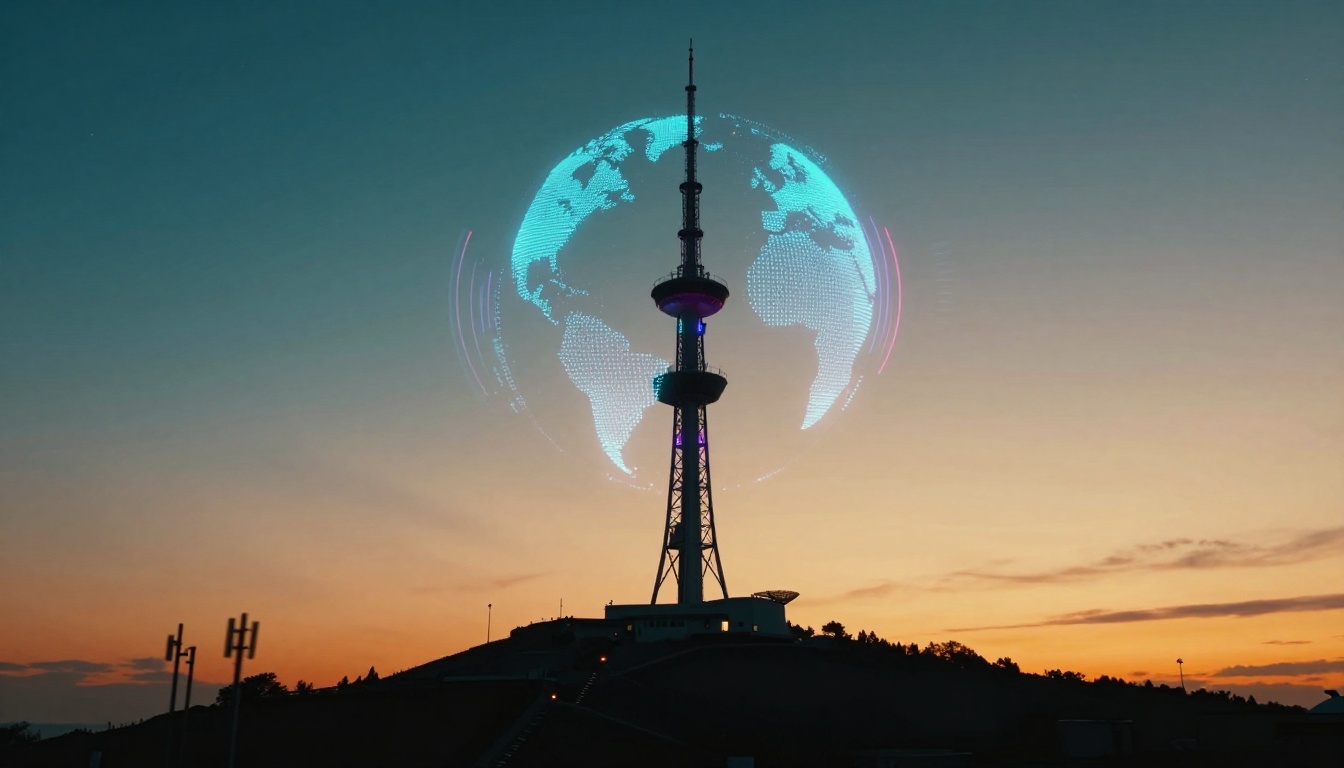
Have you ever watched a massive event and never thought about how it got to your screen? Broadcasters pull it off with a mix of proven broadcast systems and newer internet methods. They send the same content to millions, fast enough for live moments.
Today, that job usually means choosing between over-the-air (OTA) signals, cable and satellite delivery, streaming over the internet, and mobile-friendly 5G broadcast. Each method has its own strengths, costs, and limits.
And in 2026, audiences expect both reach and choice. You want reliable coverage in your area, plus the option to watch on your phone or tablet.
So how does it all work, step by step? Start with traditional delivery, then move to streaming and IP networks, and finally look at the technologies that make everything scale.
How Traditional Methods Still Deliver Shows to Your TV
Traditional broadcasting is like sending a public letter. You aim it at a wide area, and anyone with the right “address” can receive it. In TV, that usually means linear programming. Everyone gets the same feed at about the same time.
These systems still matter because they’re efficient. One signal can serve many homes without each viewer requesting a separate copy. That saves network load, especially during big games, breaking news, and severe weather.
For quality, broadcasters rely on modern compression. Video gets packaged into a smaller stream using codecs like HEVC (and sometimes newer formats). Then transmitters push it through the air or through dedicated lines.
If you picture radio waves as invisible highways, broadcasting is the on-ramp. Your antenna, cable box, or satellite dish is the exit ramp. After that, your receiver turns the stream back into audio and video.
One key upgrade in the US is ATSC 3.0 (NextGen TV) for OTA stations. It can deliver better picture, improved audio, and extra features that pair broadcast with internet services. For an overview of what stations can do with ATSC 3.0, see ATSC 3.0 basics from the ATSC.
Over-the-Air TV from Local Towers
OTA starts with a station’s studio feed, then pushes it to a nearby transmitter tower. From there, the station broadcasts radio signals your home antenna can receive. Since the signal is free to the public, OTA can still reach people without paying for cable.
ATSC 3.0 expands what OTA can carry. It supports 4K video, HDR, and stronger audio options. It can also send targeted alerts that reach compatible devices faster than older systems.
In practice, the workflow looks simple. The station encodes the live or scheduled program into broadcast-ready streams. Next, it modulates those signals for transmission. Finally, your TV or tuner decodes them and plays them.
OTA also shines in emergencies. When power and internet links fail, broadcast towers can still cover a region. That’s one reason many public safety messages still depend on broadcast infrastructure.
However, OTA coverage and device support can vary by area. If your TV doesn’t have ATSC 3.0 support, you may need a converter box. A consumer-friendly way to understand those options is covered in ATSC 3.0 FAQ from Crutchfield.
Cable and Satellite for Reliable Home Delivery
Cable delivery works like a neighborhood pipeline. The station feeds content into a provider network. Then cable lines carry the signal to specific service areas and homes. Because the path is controlled, cable can offer stable performance and a large channel lineup.
Satellite works differently. A dish at home catches signals sent from space. The satellite repeats and routes those signals back to a wide footprint. This can help in rural areas where cable lines are costly or slow to build.
Both methods also support paid channel models. That matters because broadcasters and networks often earn revenue through subscriptions and carriage agreements.
That said, many households now get more content through internet services. Still, cable and satellite stay strong for live events, especially sports and news. They also serve viewers who want a familiar channel guide and predictable reliability.
Modern Streaming Ways to Reach Viewers on Any Device
Streaming flips the model. Instead of blasting one TV stream to everyone, streaming sends video over the internet. Viewers connect using Wi-Fi or mobile data, then play the content on a device.
This gives more control to viewers. They can watch on demand, pause, and switch devices. They can also pick different camera angles or related clips when apps support it.
In the US, streaming’s share keeps rising. Nielsen’s latest Gauge data through December 2025 shows streaming at 47.5% of total TV viewing share. Cable sits at 20.2%, and broadcast sits at 21.4%. That means nearly half of viewing already moves through internet paths.
| Category | Share of Total US TV Viewing |
|---|---|
| Streaming | 47.5% |
| Broadcast (OTA) | 21.4% |
| Cable | 20.2% |
| Other | 10.9% |
The takeaway is simple: for a lot of audiences, streaming isn’t “extra.” It’s the main route.
For context on how streaming and cable compare in 2026, see streaming vs. cable statistics from CableCompare.
OTT Platforms Like Netflix and YouTube TV
“OTT” means over-the-top delivery. In plain terms, it’s apps that send TV through the internet, without needing a traditional cable subscription as the delivery layer.
That’s why you can watch on a smart TV, laptop, or phone. The platform sends video segments to your device, based on your connection speed. If your internet slows down, the service can switch to a lower bit-rate version to avoid buffering.
For live events like sports, OTT platforms focus on low-latency playback. They still use buffering, but they keep it short. Meanwhile, stream engineers tune encoding settings to balance picture quality and delay.
However, OTT can face congestion. During a big game, traffic spikes in the same moment across cities. That’s where CDNs, adaptive bitrate streaming, and clever routing matter.
IP Delivery, CDNs, and Efficient Multicast
Once content leaves the studio, streaming often travels as IP packets over managed networks. For professional broadcast workflows, stations may use standards that carry video over ethernet, which can simplify routing inside control rooms.
One important piece is the CDN, or content delivery network. A CDN stores copies of video or caches segments closer to viewers. So your device pulls data from a nearby server, not from one far-away data center.
CDNs help for two reasons. First, they reduce travel time. Second, they handle huge traffic spikes better than a single origin server.
Then there’s multicast, which can help during truly live and widely distributed feeds. With multicast, a network can send one stream and let many receivers join. That reduces duplicate traffic.
Real multicast support can vary by ISP and network setup, but the idea stays the same. Broadcasters try to avoid sending the same content separately to every viewer when they can.
In other words, streaming still follows a broadcasting mindset. You just broadcast through network techniques instead of radio towers.
5G Broadcast for Mobile Crowds and Emergencies
5G adds a new twist. Instead of relying on each phone to download the same video over normal unicast internet traffic, 5G broadcast aims to deliver content efficiently to many devices.
This matters in stadiums, arenas, and crowded events. If everyone tries to stream over regular data connections, networks can get jammed. Broadcast-oriented delivery can cut down the repeated load.
It also fits public safety use cases. Broadcasters and partners can send alerts and short video updates to many devices in a defined area. That can help during severe weather or other emergencies, especially when networks get overloaded.
In 2026, the market shows more movement from trial to real deployment plans. For example, CSI Magazine reports momentum around 5G broadcast licensing and expansion in the US during 2026, including experimental licensing efforts. Read US 5G Broadcast momentum expected in 2026.
Key Technologies That Make Broadcasting Scalable
Sending video to millions isn’t just about choosing an antenna or an app. It depends on turning raw media into a signal that networks and devices can handle at scale.
Scalability comes from a chain of systems that do their jobs without breaking the live timeline. One slow step can cause delay, dropouts, or quality shifts.
Here’s a simple map of the core pieces broadcasters build around.
| Broadcast stage | What happens | Why it scales |
|---|---|---|
| Encoding and compression | Video becomes a smaller stream | Less bandwidth, more stability |
| Packaging and signaling | Streams get organized for delivery | Receivers find the right parts fast |
| Transport and routing | Content moves over networks | Networks handle bursts better |
| Distribution and caching | Copies get stored closer to viewers | Fewer long-distance hops |
| Playback adaptation | Devices adjust quality in real time | Less buffering during spikes |
In short, broadcasters scale by standardizing the pipeline and designing for peak demand.
Encoding and Compression to Fit Any Network
Encoding takes raw video and turns it into a coded format. Compression reduces size while trying to keep details sharp.
Modern broadcasters often use HEVC because it cuts bit rates compared to older codecs. Some setups also use AV1 or other modern options where devices and platforms support them. The goal stays consistent: deliver a good image without asking the network to carry too much.
Think of it like packing for a trip. You can bring a bulky suitcase, or you can compress your clothes and fit more in one bag. Broadcasters compress video so one “bag” can carry the event for millions.
On the streaming side, adaptive bitrate makes this even more important. The platform encodes the same content into multiple quality levels. Then your device picks the best match for current connection speed.
Meanwhile, automation helps manage large catalogs and schedules. Many workflows also use AI-assisted tagging for easier search and moderation. That saves human time, especially for long event libraries.
Transmission Protocols for Fast, Secure Streams
After encoding, signals move using transmission protocols. This is where latency, reliability, and security get decided.
For live ingest, broadcasters often use real-time streaming protocols that can handle continuous data. For example, some production workflows use RTMP-style ingest paths. Other modern stacks use newer transport methods that support faster, safer delivery.
For secure delivery, encryption matters. Viewers should get content protected from interception. Platforms also need integrity checks and access control, especially for paid events.
In practice, software-defined workflows help here. Broadcasters can route feeds through cloud services for encoding, packaging, and monitoring. If one server struggles, traffic can shift to another.
Also, monitoring is a big deal. Teams track delay, packet loss, and audio/video sync. When something drifts, they adjust quickly.
That’s why broadcasting looks like magic from the couch. Behind the scenes, it’s steady engineering, constant measurement, and fast fixes.
2026 Trends Shaping How Broadcasters Connect with You
In 2026, the winning approach is hybrid. Broadcasters want both reach and flexibility, so they combine older and newer systems.
OTA still covers viewers who want free access and fast emergency updates. Streaming still wins with choice, convenience, and device flexibility. Cable and satellite remain important for many households, mainly for sports packages and familiar channel navigation.
Meanwhile, broadcasters are also investing in better “glue” between platforms. Some services mix broadcast TV with app extras. For instance, you might watch a game on a TV feed, then pull additional stats or related clips through an internet connection.
Personalization is also growing. AI can help with smarter recommendations, faster edits for short-form clips, and quicker metadata cleanup. However, the best teams balance automation with human review. They still care about accuracy, labeling, and viewer trust.
Another trend is lower-latency cloud setups. Broadcasters want live video closer to the viewer, and they want it on time. That pushes more production tasks into regional cloud zones and multi-CDN strategies.
Finally, authenticity matters more as content spreads. Broadcasters and platforms keep improving safeguards against fake streams and stolen feeds. When something is live, audiences expect it to be real.
If you want to see how ATSC 3.0 and NextGen TV aim to add features to OTA, this consumer overview is a useful starting point: What NextGen TV means for viewers.
Conclusion
Broadcasters reach large audiences by combining multiple delivery paths and a shared technical pipeline. OTA towers, cable lines, and satellite footprints can deliver dependable coverage across regions. Streaming then adds device choice and on-demand control.
On top of that, broadcasters use encoding, compression, transport protocols, and CDNs to scale without losing quality. In many cases, they also use broadcast-friendly approaches for mobile crowds and emergencies, including 5G broadcast plans.
The biggest idea for 2026 is simple: hybrid systems win. Older tech still covers people. New tech gives viewers options. Together, they help broadcasters meet expectations without falling behind.
If you want a practical next step, check whether your TV supports ATSC 3.0. Then try a live streaming app for events where it offers lower delay and more options. Either way, you’ll see the same reality from a different delivery angle, and that’s the point.