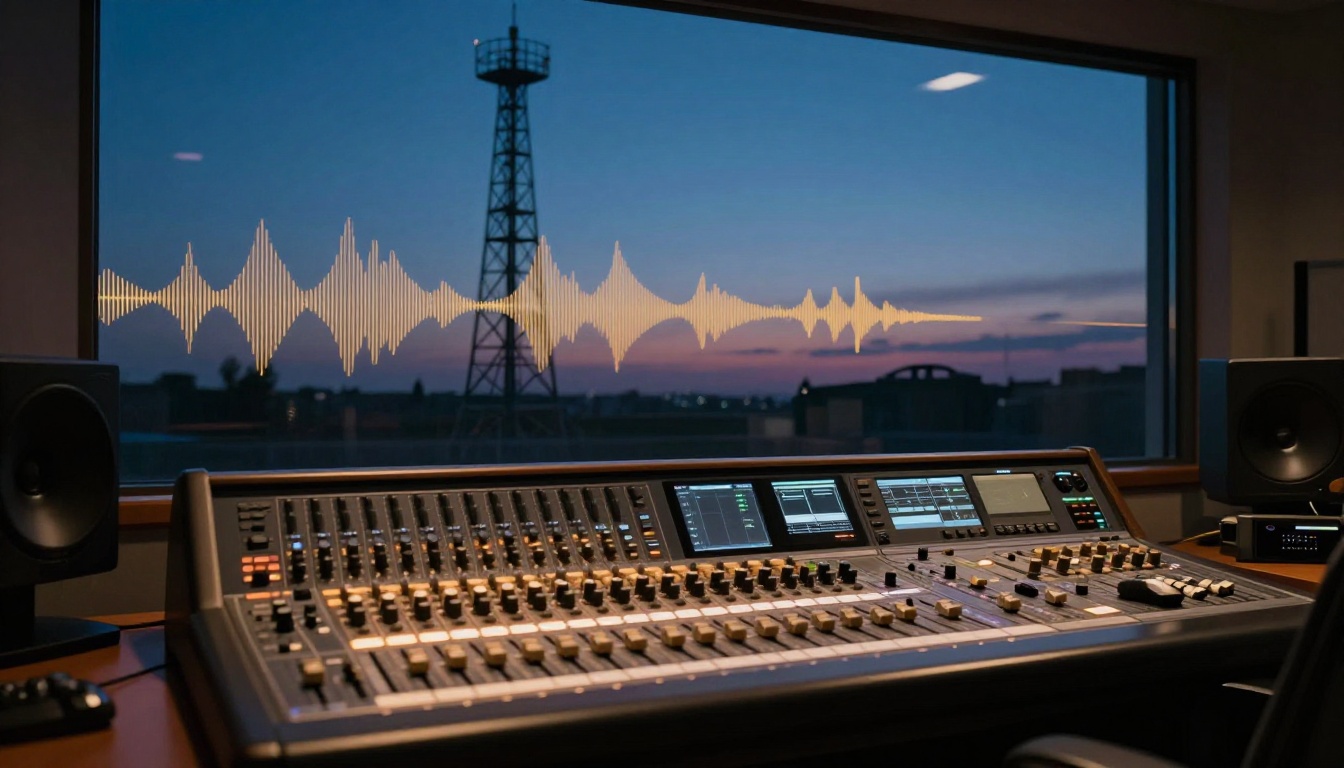
Tuning into your favorite station during a drive can feel like magic. You hear clear voices and music, even when the station is far away. So how does the signal travel from a studio to your car?
Radio stations move sound by turning it into radio waves. Then your receiver does the reverse, so you can hear it again. In plain terms, the path looks like this: studio prep, modulation, transmission, antenna launch, and travel to receivers.
Classic AM and FM work this way, too. And as of 2026, many stations add digital options like HD Radio side-by-side with the original analog signals. Let’s break it all down, step by step, at an 8th-grade level.
What Happens in the Studio: Processing Audio Before Transmission
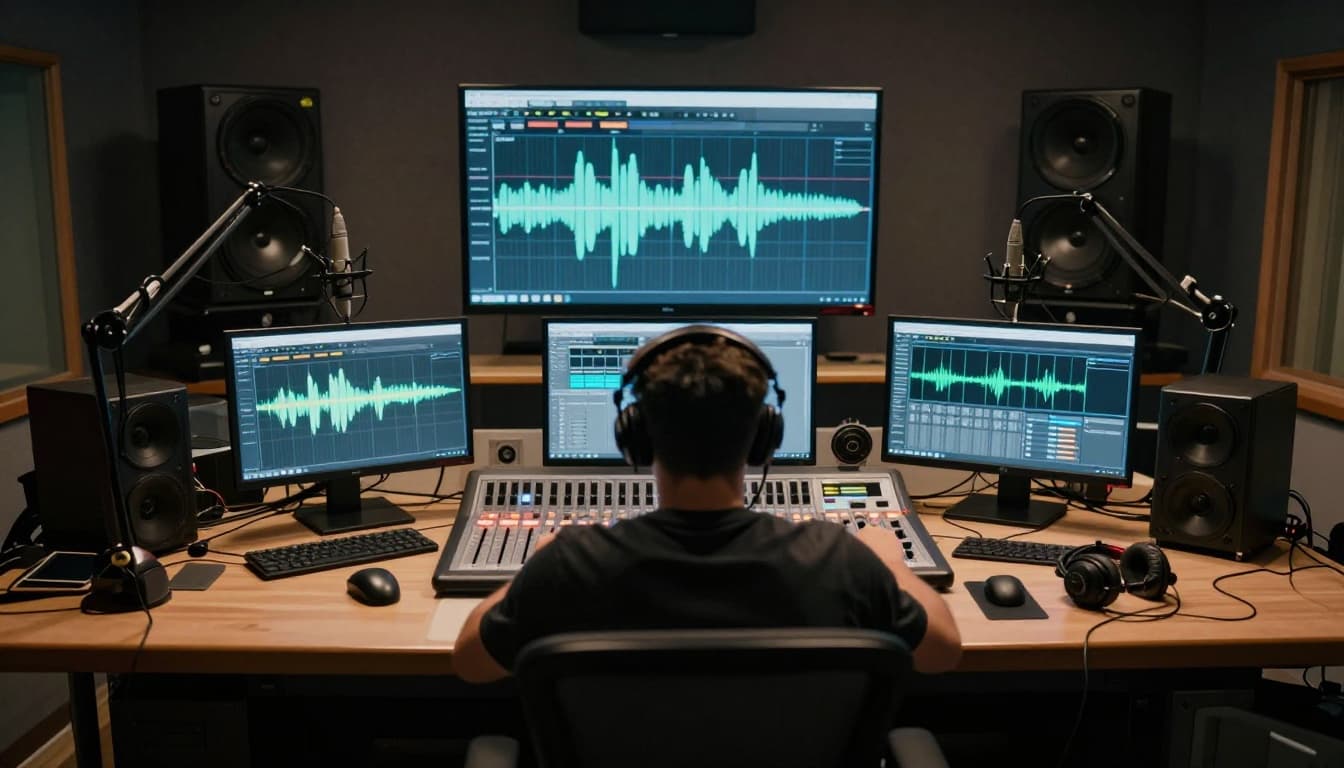
Before any radio wave leaves the building, the station has to prepare the sound. Audio comes from microphones, music files, or a computer system. First, it hits a mixer, where engineers balance volume levels and choose the right sources.
Next comes audio processing. This part shapes the sound so it stays understandable in real life. Roads get noisy, cars move, and antennas pick up interference. So stations use tools that control loudness, reduce messy noise, and tighten up the dynamic range.
For example, a podcast might sound great on headphones. But radio needs a signal that keeps its punch. Radio processing also helps keep stations within legal broadcast limits.
A good way to picture it is like tuning a guitar before playing. If the guitar is out of tune, everything sounds off. If the station audio isn’t processed, your radio may sound weak or harsh.
Here’s what many stations do during processing:
- Compression: Keeps big peaks from blasting, and quiet parts from disappearing.
- Equalization (EQ): Balances frequencies so speech stays clear.
- Limiting: Prevents the signal from going overboard.
- Effects (sometimes): Adds a consistent sound character.
If you want a deeper look at why processing matters, check Audio Processing and Compressors for Your Station. It explains how processors help make FM sound louder and stay legal.
The result of all this studio work is a clean, controlled signal. Then the station can modulate it, meaning it will “ride along” on a carrier wave.
Modulation Magic: AM vs FM, How Audio Hitches a Ride on Radio Waves
A radio station can’t just beam sound directly. Sound needs air movement, but radio uses electromagnetic waves. So the station first creates a steady “base” signal called the carrier.
Then it changes the carrier in a way that represents your audio. That changing is modulation.
Think of the carrier like a bicycle frame. Audio is the rider. AM and FM are different ways to attach the rider and move the bike.
- AM stations use frequencies in the kHz range (for example, 680 kHz).
- FM stations use frequencies in the MHz range (for example, 88 to 108 MHz).
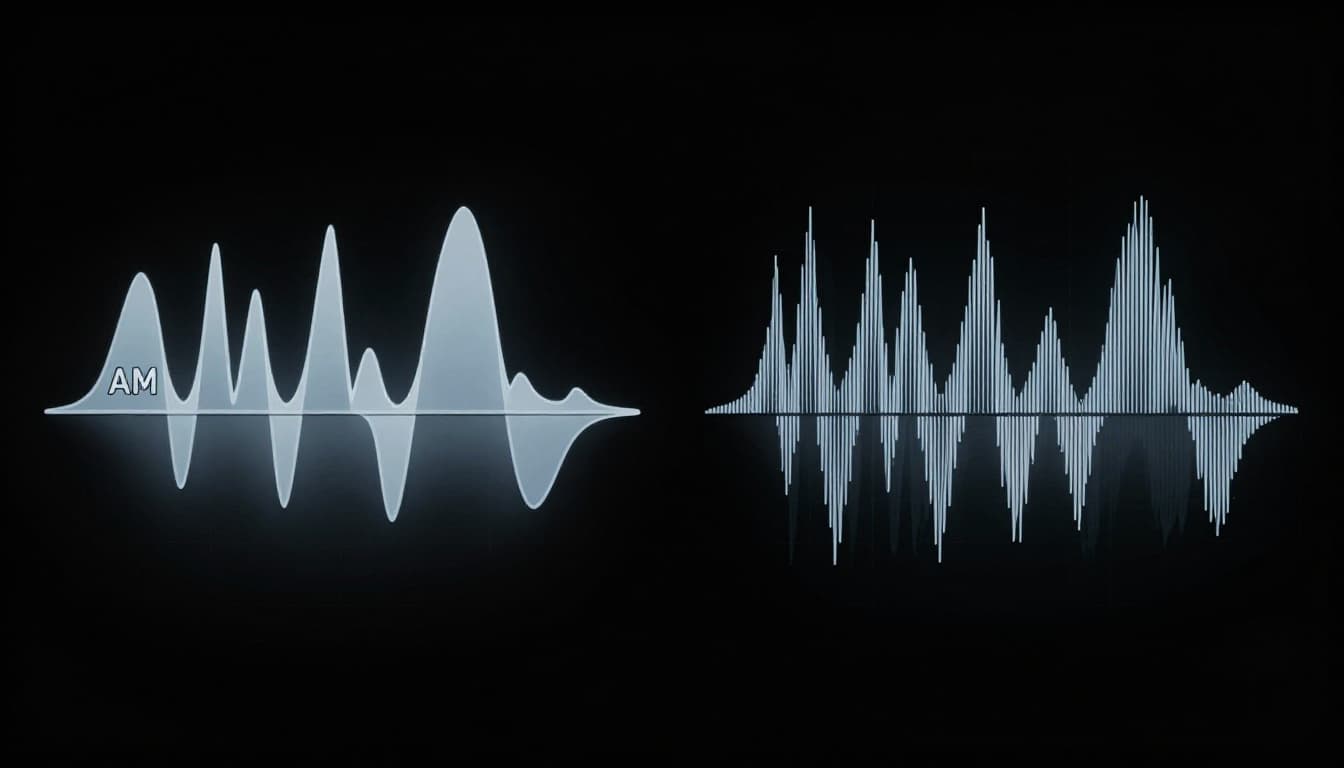
In AM, the carrier’s amplitude changes (the wave gets taller or shorter). In FM, the carrier’s frequency changes (the wave’s pitch changes). Both methods carry your audio information.
FM usually sounds cleaner because it’s more resistant to many types of interference. AM often travels farther in certain conditions because it can bounce off the upper atmosphere at night. If you want a clear comparison, FM vs AM: Technical Differences in Radio Broadcasting breaks down the core differences in simple terms.
Amplitude Modulation (AM): Varying the Wave’s Strength
In AM, the carrier frequency stays steady. However, the station changes the height of the wave.
When the audio is louder, the AM wave’s peaks get taller. When the audio is quieter, the peaks shrink. That’s the key AM idea: audio equals change in amplitude.
This works, but AM can pick up more interference. Static from electrical devices often shows up as extra amplitude changes. As a result, it can sound like hiss or crackle.
Yet AM can have long reach, especially at night. One reason is skywave propagation, where parts of the signal reflect off the ionosphere. That means your receiver can sometimes hear stations from farther away than you’d expect. (More on travel comes next.)
Frequency Modulation (FM): Tweaking the Wave’s Speed for Crisp Sound
In FM, amplitude stays steady more often. Instead, the station changes the frequency slightly to match the audio.
A higher audio signal shifts the carrier’s frequency a little. A lower audio signal shifts it back. So your radio can recover the audio by tracking those frequency changes.
This approach helps with clarity. Many forms of noise mainly affect amplitude. Since FM encodes audio in frequency, it often resists those unwanted amplitude changes.
FM also relies more on line of sight. That means hills, buildings, and trees can block signals more easily. In everyday terms, FM often sounds best in cities and suburbs within a practical coverage radius.
From Transmitter to Antenna: Boosting and Launching the Signal
Once modulation is ready, the station must send it out. That’s where the radio station transmitter antenna setup matters.
The station begins by generating the exact carrier frequency. Engineers use oscillators for that. Then they feed the modulated signal into a chain of amplifiers. The goal is simple: make the signal strong enough to reach distant listeners.
A transmitter often outputs tens of thousands of watts, depending on the station and license. It might sound huge, but radio waves spread out as they travel. Also, the signal loses strength over distance. So higher power helps fight that loss.
A transmitter is like a megaphone for radio. But the real “speaker” is the antenna.
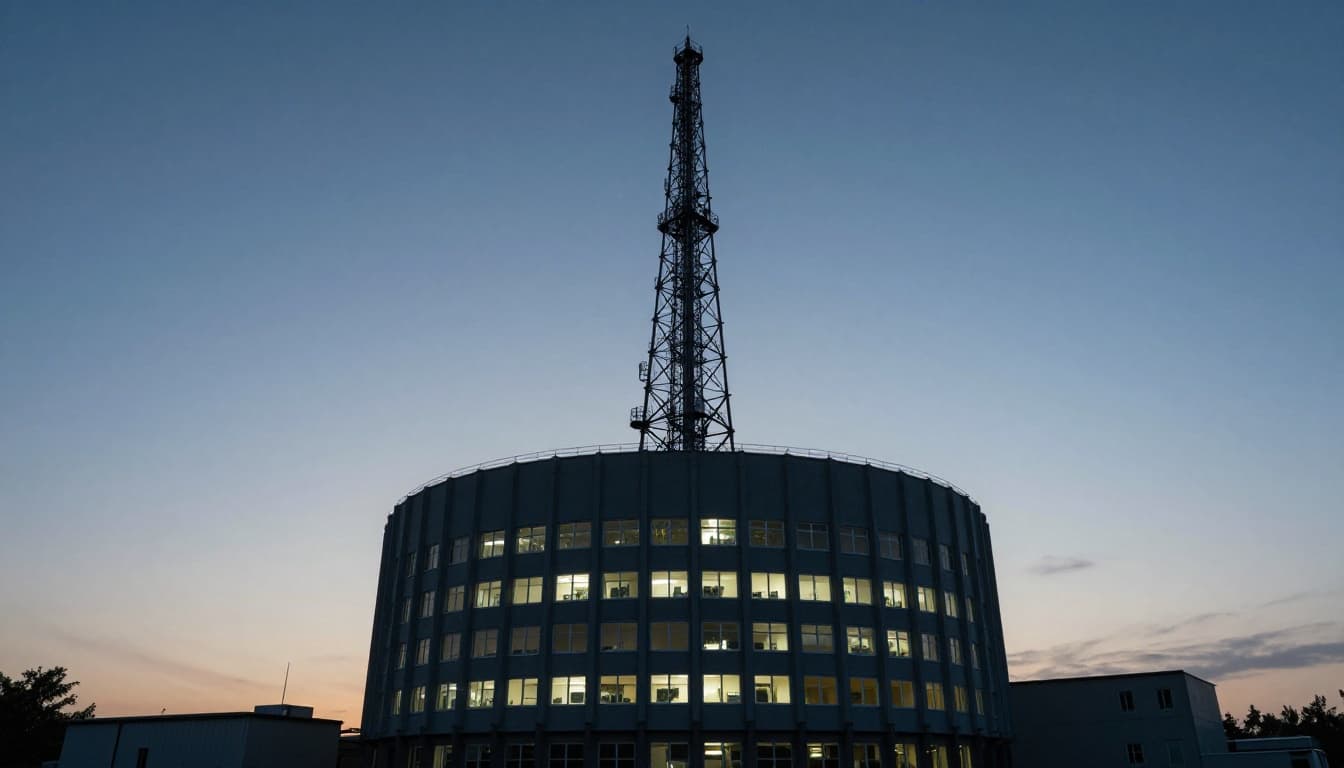
Then the antenna does the conversion. Inside the transmitter, you have electric current. The antenna transforms that electrical energy into electromagnetic waves. Those waves radiate outward into the air.
If you want a plain-language explanation of how antennas turn electricity into radio waves, see How Do Radio Antennas Work to Transmit and Receive Signals?. It covers the basic “invisible gateway” idea without heavy math.
The Transmitter’s Power Punch
A transmitter’s job isn’t just “more power.” It must send the right frequency cleanly, too.
First, the station makes the carrier. Then it applies modulation and sends the result into amplification stages. Usually there’s a pre-amplifier to shape and prepare the signal, followed by a larger final amplifier that boosts power.
Modern stations also try to reduce interference and keep signals stable. Some systems use automated control and monitoring. In 2026, many upgrades focus on better stability and cleaner signal behavior, not just raw wattage.
Antenna Launch: Turning Electricity into Invisible Waves
Antennas are shaped to radiate energy in specific ways. Many broadcast antennas use tall structures. Height helps because the wave can clear obstacles.
Some antennas radiate more in all directions, which fits stations meant for wide coverage. Others use directional patterns to serve specific areas or avoid interference with other stations.
Even without math, you can understand the impact of height. If the antenna sits higher, the signal has fewer barriers. As a result, your receiver can lock onto it more reliably.
After that, your station’s modulated carrier is now out in the world as real radio waves.
How Radio Signals Travel and Reach Your Receiver
Radio waves don’t stay strong forever. They spread out and weaken with distance. Also, the environment matters a lot.
In general, the closer you are to the station, the stronger the signal. After that, you’ll see more fading and noise. Still, different bands behave differently.
AM signals can travel in ways FM usually can’t. At night, AM may bounce off the ionosphere, reaching farther areas. During the day, AM often follows ground-wave behavior and doesn’t always go as far. That’s why AM can sometimes “arrive” from unexpected directions at night.
FM signals usually depend more on line of sight. If you’re within range and the terrain is favorable, FM can sound very clear. Trees, buildings, and hills can block or weaken the signal.
When those waves reach you, your receiver starts with tuning. It selects the right frequency, then amplifies the signal enough to work with. Next comes demodulation, which is the reverse of modulation. The receiver reads the carrier changes and turns them back into audio.
Finally, it powers the speaker system in your car or home unit.
The biggest reason stations fade in and out is that the signal weakens and gets blocked or scattered.
If you want an organized explanation of how propagation works, including concepts like ground wave, space wave, and why signals behave differently, try Propagation Basics.
2026 Updates: Digital Radio and Future Signal Tech
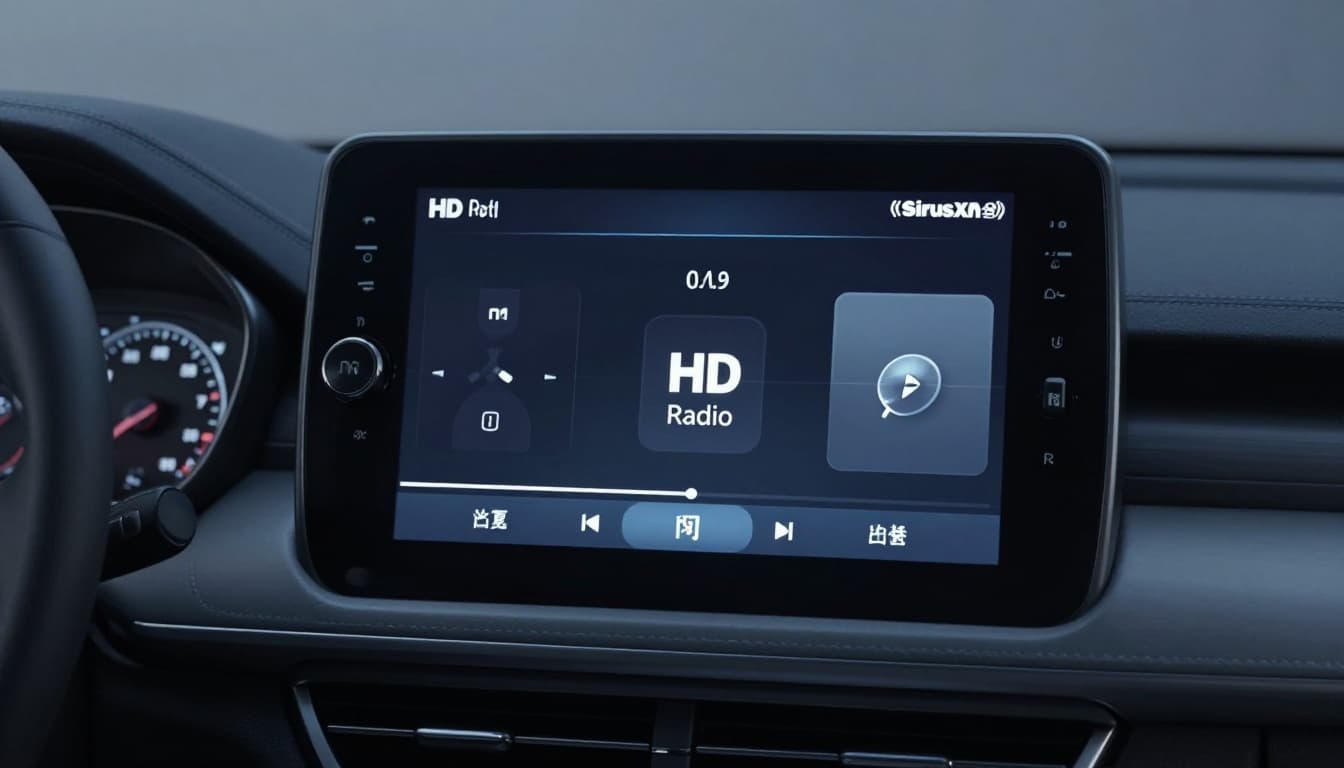
In March 2026, analog radio still matters. But broadcasters also keep expanding digital options to improve sound and add data.
Here’s the practical view: many stations now offer digital extensions while keeping their core broadcast. That can mean better audio paths through receivers, plus added online listening options. Stations also invest in streaming tools and app features because audiences listen across more devices than ever.
Meanwhile, some systems support higher-definition transmission for radio audio. Broadcasters continue upgrading equipment for high-definition-style improvements and more reliable IP-based workflows for distributing content.
Also, satellite radio remains popular in cars. Companies keep tuning their strategies toward “back-to-car” listening and in-vehicle usability. For an example of how SiriusXM views its position, see SiriusXM sees opportunity as car focus stabilizes.
What about totally new transmission ideas, like hybrids with newer wireless networks or AI steering for radio beams? As of early 2026, there haven’t been major, widely reported breakthroughs that replace the basic AM/FM model for everyday broadcast. Instead, radio’s near-term growth looks like combining old airwaves with new delivery paths.
So in 2026, the “signal magic” stays mostly the same. The big change is how stations add options around it.
Conclusion
Next time you hear a station clearly on a long drive, you’ll know what’s behind that sound. It starts in the studio with processing that keeps audio clear. Then modulation turns your voice and music into changes on a carrier wave.
After that, the transmitter amplifies the signal, and the antenna launches invisible radio waves. Finally, the waves travel through the air, weaken, scatter, or bounce, until your receiver demodulates them back into audio.
So when radio sounds like it’s “just there,” remember the chain of steps working together in the background. If you want, tell me your favorite station, and what you love about how it sounds. What’s your best “I can’t believe this came through” radio moment?