
When your phone calls go through, your GPS locks in, and your TV stations reach your home, you’re using managed radio frequencies. Without rules, signals overlap, receivers get noisy, and some services can fail.
In the US, this work involves multiple agencies and lots of filings. Worldwide, it starts with the ITU, a UN agency that builds a shared “frequency map” for countries to follow.
Then comes the harder part: turning those global plans into real-world licenses, auctions, and enforcement. That includes today’s push for new 5G and 6G bands as of March 2026.
In short, organizations like the ITU and the FCC help assign spectrum using allocations, negotiated conference outcomes, and practical rules for interference protection. Next, you’ll see how the global system works, then how the US applies it.
How the International Telecommunication Union Sets Global Rules
Radio frequencies do not belong to one country. They travel across borders, so countries need shared rules. That’s where the International Telecommunication Union (ITU) comes in, specifically the ITU Radiocommunication Sector (ITU-R).
Think of radio spectrum like a crowded playground. If every kid runs wherever they want, accidents happen. The ITU’s job is to decide where activities belong, so different services can coexist without constant chaos.
The ITU builds a worldwide framework through the Radio Regulations and a set of treaties. It also publishes tables that show which parts of the spectrum are allocated to different “services,” like mobile, satellite, and radio astronomy. Importantly, it does not micromanage every local decision. Instead, it sets the big boundaries so countries can plan responsibly.
A key milestone happens at a global conference called the World Radiocommunication Conference (WRC). These meetings happen about every four years, and they update the rules for new tech needs and changing priorities. For example, WRC-23 produced major outcomes, and the next conference, WRC-27, is set for October 18 to November 12, 2027 in Shanghai. Those updates matter for how future 5G, satellites, and science operations fit into the band plan.
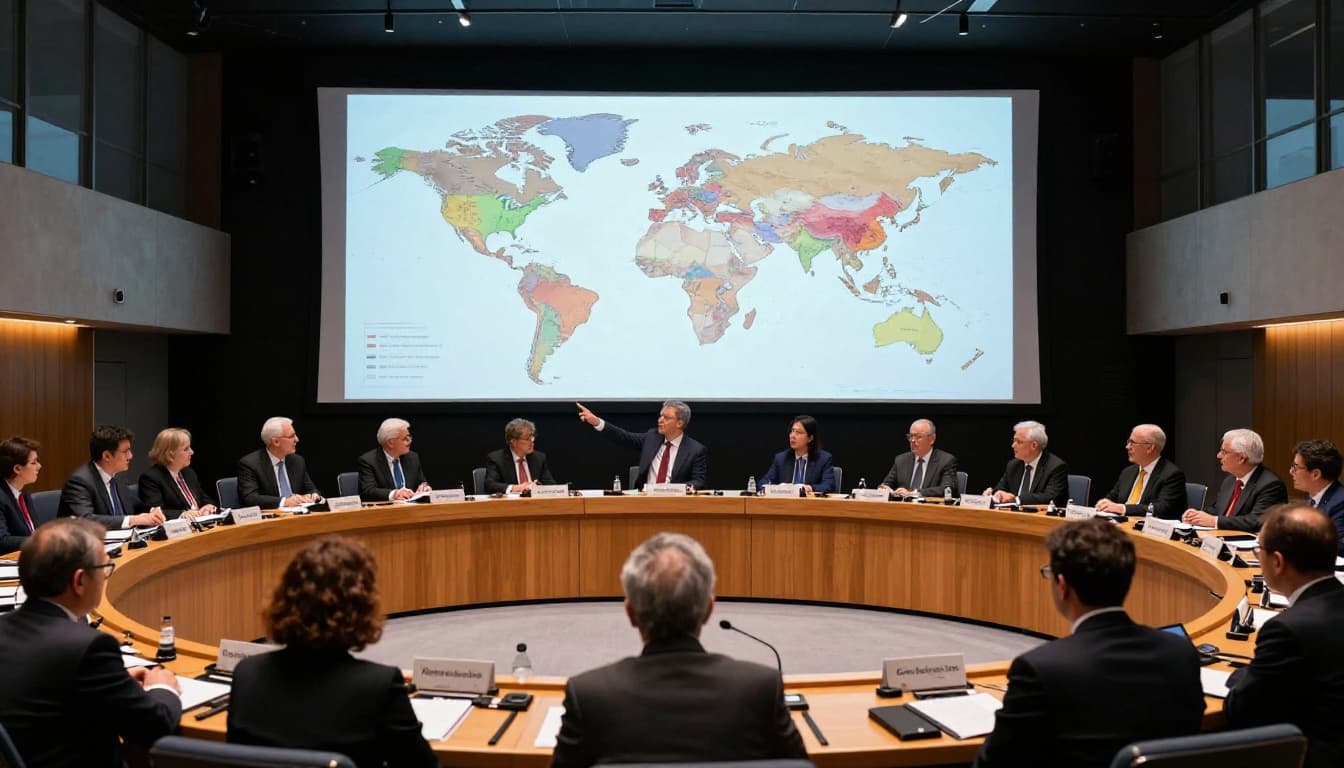
World Radiocommunication Conferences: The Heart of Global Decisions
If you want to know how radio frequencies get assigned “the right way,” start with the WRC. Countries show up with proposals about what spectrum should support next. They then negotiate so new uses do not harm existing ones.
The process is practical, not theoretical. Countries argue for specific bands, define service rules, and set conditions for sharing. When negotiations end, the WRC produces updates that countries can later translate into national actions. In other words, WRC decisions act like global rule changes you must implement at home.
WRC-23 is a strong example. ITU published the WRC-23 outcomes and the official Final Acts, which capture what changed across telecommunications, space, and science services. If you want the full list of decisions in the language of regulators, these documents are the primary source. See Outcomes of the World Radiocommunication Conference 2023 and the WRC-23 Final Acts.
Meanwhile, planning for WRC-27 has already started. Based on the latest agenda overview, major topics include possible sharing studies in key ranges for mobile use, extra spectrum for mobile satellite services, and updates touching Earth observation services. That’s why teams in the US care early, even though the conference is not until 2027.
For you as a user, this can feel invisible. Still, it’s the reason your devices keep working as networks evolve. Better phones, improved rural coverage, and more reliable satellite links depend on these conference outcomes.
Tracking and Coordinating: ITU Tools for Satellites and More
Negotiation sets the rules, but day-to-day operations require tracking. That’s especially true for satellites, where signals can reach wide areas and where orbit positions matter.
The ITU uses coordination procedures and documentation to reduce the risk of harmful interference. For satellite-related services, countries and operators work through ITU structures that support planning and registration. One tool you’ll see referenced often is the BR International Frequency Information Circular (BR IFIC) for space services. It helps share frequency information so administrations can coordinate responsibly. The ITU explains BR IFIC through BR International Frequency Information Circular (BR IFIC) – Space Service.
Here’s a simple example. Imagine two satellite systems that both want to use a similar frequency region. If they launch without coordination, their signals could overlap at the wrong ground sites. Coordination helps identify conflicts early. It can lead to changes in parameters, timing, or use conditions.
This matters beyond satellites too. Terrestrial services also cross borders, and interference does not respect political lines. The ITU framework pushes countries to coordinate in advance rather than react after problems hit.
So while the WRC is the big negotiation moment, ITU coordination systems are the ongoing “air traffic control” layer for frequency assignments and shared planning.
US Frequency Management: FCC Auctions and NTIA Oversight
The US follows the ITU’s big picture, then applies it with national rules. In the US, you’ll mostly see two key roles:
- FCC handles non-federal spectrum (commercial wireless, broadcasting, most satellite licensing in practice).
- NTIA handles federal spectrum (government users like defense and other federal agencies).
They align with international requirements, but they also adapt for US needs, technology timelines, and policy goals.
Here’s a simple way to think about it. The ITU sets a global “what belongs where” map. The FCC and NTIA decide “who can use it here” and “under what conditions.”
| Task | Main US body | What it controls |
|---|---|---|
| Commercial licenses and auctions | FCC | License terms, bidding rules, enforcement |
| Federal government use | NTIA | Federal frequency plans and coordination |
| International consistency | ITU-R plus US teams | Band plans and rules countries must fit |
In practice, the FCC starts new licensing rules through public processes like notices of proposed rulemaking, then issues orders and licensing actions. After that, the FCC checks compliance, investigates issues, and can require changes if a system causes harmful interference.
Meanwhile, spectrum planning connects to today’s 5G and early 6G focus. The US also pays attention to unlicensed access, since technologies like Wi‑Fi depend on rules that let many devices share spectrum without constant licensing.
Auctions and Licenses: How Telecom Giants Secure Spectrum
For many commercial services, the US uses auctions to assign spectrum rights. It’s a market-style method, and it can move licenses to companies ready to build networks faster than an administrative-only approach.
The auction path usually looks like this:
- The FCC identifies a band and decides on license details.
- It releases an auction notice with deadlines, bidding rules, and eligibility.
- Winners pay and file required documents.
- Licensees build out according to the rules and timing requirements.
A good example is the FCC’s Auction 113 Procedures for the AWS-3 Auction. If you want the exact framework behind one current auction cycle, start with Auction 113 Procedures for the AWS-3 Auction. It lays out the auction process, including how the FCC structures licensing for the band.
Auctions are not the only path. For some uses, the FCC also supports licensing for different technologies, or sets aside spectrum for specific purposes. In addition, the FCC leaves room for unlicensed spectrum, where devices can operate under rules instead of paid licenses.
That mix is key. Licensed bands can support services that need protection and stable service rights. Unlicensed bands help innovation move fast, since companies can build products without waiting for a license.
Staying Compliant: Enforcement and Protecting Key Uses
Licenses come with responsibilities. When a company transmits, it must respect limits on power, emissions, and operational parameters.
If you think of spectrum like a neighborhood, licenses set property lines. Enforcement exists because radio interference is like noise in a shared apartment building. One unit blasting music too loud can disrupt others, even if the neighbors never see the cause.
In the US, the FCC can take action through investigations and rule enforcement. When interference concerns arise, parties can file technical complaints or submit evidence showing harmful interference. Regulators then require solutions, which can include adjustments, mitigation steps, or other compliance changes.
The FCC also has to protect key uses like aviation safety systems and scientific receivers. Those systems often need strong protection because they can be sensitive to overload or interference. As a result, the FCC frequently weighs tradeoffs during rulemaking and licensing.
Meanwhile, the ITU framework still matters. If US rules allow a certain use, US decision-makers want to be sure that use can work with international allocations, especially where signals cross into other regions.
Fresh Updates in 2026: 6 GHz and Beyond
One of the biggest ongoing stories in March 2026 is the expansion of unlicensed use in the 6 GHz band, especially for Wi‑Fi-like services.
The FCC’s latest rules create a new device category called Geofenced Variable Power (GVP). In the Federal Register, the FCC explains how unlicensed devices can use higher power levels in specific parts of the band, based on location controls (geofencing) that reduce risk to existing users. See Unlicensed Use of the 6 GHz Band; Expanding Flexible Use in Mid-Band Spectrum.
The key idea is simple. Higher power can improve coverage outdoors, and geofencing helps keep that power away from sensitive locations. In the latest rule approach, GVP devices can operate in two portions of the band, and they do not get permission to boost power everywhere.
This is a good example of how spectrum management blends innovation and protection. Instead of choosing between “more Wi‑Fi performance” and “protect existing services,” the FCC uses technical rules to try to do both.
And it connects to the larger 5G and 6G planning timeline. As mobile networks expand, regulators also keep refining how unlicensed devices share spectrum. That way, consumers get better internet, not a bigger interference headache.
Challenges, Trends, and the Future of Spectrum Sharing
Spectrum is finite. As more services demand more bandwidth, it gets harder to find “clean” channels. Interference risk grows too, especially when new technologies push power, antenna height, or device density.
At the same time, regulators keep moving toward smarter sharing. Instead of relying only on strict separation, they increasingly use conditions that allow sharing while keeping interference under control. That trend matters for both terrestrial networks and satellite links, including modern satellite constellations in low Earth orbit.

Overcoming Interference in an Increasingly Busy Airspace
Interference problems can come from many places. Sometimes it’s a technical mistake. Other times, it’s a mismatch between assumptions and real-world deployments.
Coordination helps because it reduces “surprise interference.” The ITU encourages cross-border planning, and the US adds enforcement and local compliance checks. When science needs protection, regulators also build guardrails into allocations and operating rules.
The hardest part is that interference effects can show up far away. A transmitter that seems fine in one area can overload a receiver hundreds of miles away, depending on terrain, antenna height, and receiver sensitivity. That’s why management is not “set it and forget it.” It’s ongoing.
Looking Ahead: 6G, Satellites, and Smarter Sharing
The future includes more than faster phones. It also includes better satellite coverage, new ways to connect remote areas, and more sensors and devices that need spectrum access.
WRC-27 will be a major next step for global rule updates in this direction. It also ties into broader ITU planning beyond radiocommunication, since future telecom policy decisions influence how countries prioritize spectrum use.
In the US, spectrum planning continues as networks move toward 5G expansion and early 6G research. Unlicensed sharing in bands like 6 GHz also keeps moving forward, because consumers want strong Wi‑Fi where they live and work.
Expect more technical approaches too. Regulators will keep asking questions like: Can we allow higher power only when it’s safe? Can we coordinate use with automated systems? Can we protect sensitive services while still opening room for new devices?
Conclusion
Radio frequencies are managed through a chain of decisions, starting at the ITU and continuing through US licensing, enforcement, and technical rules. The WRC process helps countries agree on allocations, and ITU coordination systems support ongoing satellite and service planning.
In the US, the FCC and NTIA turn those global rules into real outcomes through auctions, licensing terms, and compliance checks. Meanwhile, changes in 6 GHz during 2026 show how regulators try to expand use without causing harmful interference.
Next time you stream a show or check your GPS, remember the invisible work behind it. Spectrum is shared, and someone always has to keep the airwaves orderly.