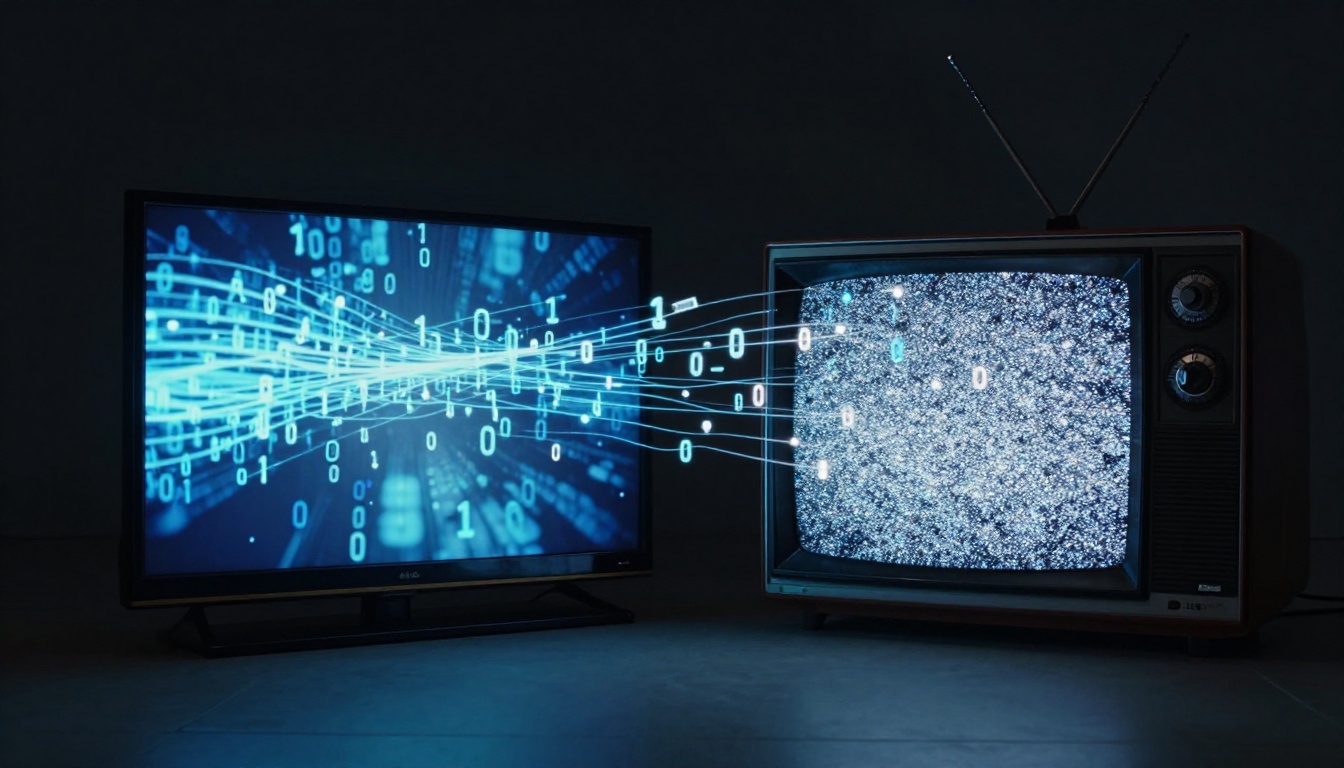
Imagine watching TV with crystal clarity even when it’s stormy, windy, or far from the transmitter. Now picture the old analog experience, where the picture slowly turns into snow and ghosts. That shift is the whole point of digital broadcasting explained in plain terms.
Digital broadcasting sends TV and radio as data, like computer files. Instead of wavy signals, it uses bits, typically 1s and 0s, packed into streams that the receiver can rebuild. Most of the US has already moved off analog over-the-air TV, and March 2026 brings more rollout momentum for newer digital systems.
So why does it feel better? Because digital can deliver sharper pictures, more channels, and extra features without squeezing people into worse reception. It also uses the airwaves more efficiently, which matters as wireless services grow.
In short, digital beats analog because it handles noise better, packs more content into the same spectrum, and supports smarter services like program guides and emergency alerts. Next, let’s break down what’s happening under the hood, without the confusing math.
What Makes Digital Broadcasting Tick Compared to Analog?
Analog TV is a continuous signal. As the signal gets weaker or interference increases, the picture degrades little by little. That’s why you see gradual blur first, then static, then “good luck.”
Digital broadcasting works differently. It converts audio and video into data packets, compresses them, then sends them out. On the other side, your TV or receiver rebuilds the content from those packets. Even better, many systems include error correction, so the receiver can fix certain mistakes caused by noise.
That difference leads to a big contrast in real life: analog can fade gradually, while digital often stays fine until a threshold, then drops off fast.
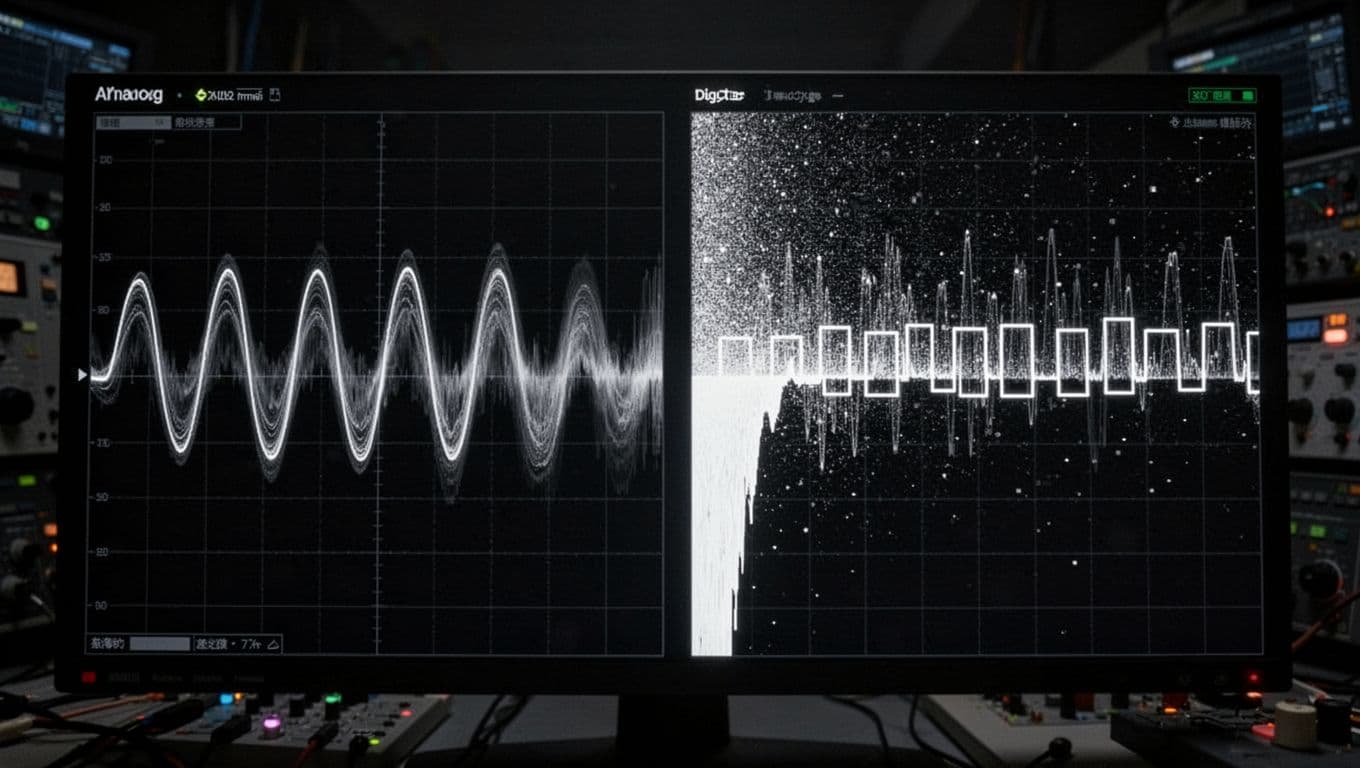
Here’s a simple comparison of what that means for viewers:
| Factor | Analog Broadcasting | Digital Broadcasting |
|---|---|---|
| Signal format | Continuous wave | Data packets (1s and 0s) |
| Quality as signal drops | Gradual fade | “Perfect or not” behavior (often called the cliff effect) |
| Typical channel packing | Usually fewer programs per same bandwidth | More programs per bandwidth due to compression (often described as several options in place of one) |
| Interference impact | Noise shows up as snow or ghosts | Errors get corrected, up to a point |
If you want a deeper technical explanation of the sudden drop behavior, see the cliff effect on Wikipedia.
Most people don’t care about the theory. They care about what happens to their TV feed. Digital tends to hold steady longer, and that’s why switching feels like an upgrade.
The Cliff Effect: Why Your Signal Stays Rock Solid
The “cliff effect” is the reason you might get a clean HD picture, then lose it quickly once your signal slips below the system’s needs. Unlike analog, which degrades in steps, digital relies on enough usable bits arriving correctly.
In everyday terms, it’s like this: analog is a shaky bridge where you can still cross, just more slowly. Digital is a gate. As long as you meet the threshold, the picture looks right. Once you miss it, the receiver can’t rebuild the stream.
That’s also why antennas matter. With analog, you could “tolerate” weaker signals. With digital, you may need better placement, a different antenna type, or stronger line-of-sight.
Still, when digital works, it often looks better across longer distances than many expect. Error correction and modern modulation help the receiver handle certain types of interference. That’s why over-the-air digital can work well for rural homes when antennas get set up correctly.
And yes, the same idea shows up in streaming. When your connection stays strong, video looks steady. When it doesn’t, you may see buffering or a sudden drop in quality. Digital broadcasting applies a similar threshold concept, just using broadcast signals instead of internet data.
If you’ve ever watched a feed suddenly freeze, you’ve seen a cousin of this behavior. It’s not “broken TV,” it’s how digital delivery is designed.
Packing More Punch into the Airwaves
Bandwidth is limited. The airwaves can only carry so much information at once. Analog formats use that bandwidth less efficiently, so broadcasters get fewer choices.
Digital broadcasting fixes that with compression and smarter transport. Instead of sending one continuous analog program per frequency slice, digital can pack multiple streams into the same slice. Then it can prioritize what needs to arrive first.
The result? More channel options, and often more HD. It also opens the door to data services. That might include extra audio tracks, better guides, or timed features tied to specific programs.
From the station side, this efficiency can reduce costs too. A broadcaster doesn’t have to buy or license additional spectrum just to expand services. Instead, they can squeeze more value out of the spectrum they already use.
For you, it usually looks like this: you scan the guide and find more choices without paying cable rates. Your antenna setup matters, but the payoff can be bigger channel lineups and better sound.
Game-Changing Wins: Why Digital Feels Like a TV Upgrade
Switching from analog to digital doesn’t just “improve” TV. It changes what TV can do.
The biggest win is picture and audio quality. Next comes channel variety. Then you get features that feel modern, like better program guides and emergency messaging.
Here are the benefits that show up in real living rooms.
- Crisp HD or even UHD visuals with less snow, less ghosting, and fewer weird artifacts
- More channels in the same broadcast space, often including more HD options
- Better audio, including surround sound where broadcasters provide it
- Interactive program guides that make channel surfing less random
- Emergency alerts that can reach you without an internet connection
- Efficiency for spectrum use, which also helps make room for wireless services like 5G
These changes also show up in radio. Digital radio can improve clarity and reduce some forms of interference. Plus, it can support extra metadata, like station info.
If you’ve ever lived with an analog setup, you know how annoying it can be to “tune” for the best possible picture. With digital, you spend less time hunting for signal and more time watching.
Picture-Perfect Quality That Wows
Analog problems tend to be visible. Snow, weak color, and ghost images show up when the signal struggles. It’s like your TV is constantly translating a messy stream.
Digital aims for a cleaner decode. That’s why you can get sharp edges and stable motion when reception stays within spec. Even in tougher weather, the picture can hold up longer than analog because the system corrects errors instead of simply letting them spill into the image.
Surround sound takes it further. When the broadcast includes it, dialog becomes clearer, and effects feel more layered. You might not notice audio upgrades right away, but your brain notices when sound stops sounding flat.
Also, compression helps. It doesn’t mean “less detail” automatically. Modern encoders can allocate bits where they matter most. Skin tones, fast action, and high-text areas get more care. That’s how digital can look better even when the broadcast is sharing limited space.
Of course, quality still depends on the broadcaster and the specific digital standard. But in general, digital’s goal is simple: fewer visible errors, more stable decoding, better viewing.
Bonus Features That Make TV Smarter
Digital broadcasting isn’t just about a better signal. It also supports additional services that analog couldn’t carry as easily.
Depending on where you live and what stations send, you may get:
- On-screen program guides that show schedules clearly
- Additional audio options, like alternate language tracks
- Data features that tie to content you’re watching
- Mobile-friendly viewing where the standard supports it
- Emergency alert broadcasts that reach you during outages
These features can reduce friction. Instead of flipping channels blindly, you can pick something that’s actually on. During storms or public safety events, alerts arrive as part of the broadcast flow.
And if you don’t use cable, those features matter even more. Over-the-air digital can feel closer to modern TV than many people expect.
Power Players: Top Digital Standards Lighting Up Screens
Digital broadcasting isn’t one single system worldwide. It’s a family of standards that share a core idea: send TV as compressed data you can decode.
Two names come up most often. In the US and parts of North America, it’s ATSC 3.0 (NextGen TV). Across much of Europe, Africa, and Asia, it’s DVB-T2.
These standards differ in details. Yet the viewer benefits tend to rhyme: stronger efficiency, better quality, and extra services.
ATSC 3.0: Next-Level TV for Phones and Cars
ATSC 3.0 is the main US push for next-generation over-the-air TV. The goal is better service over broadcast channels, including features that fit how people watch today, not just how they watched 20 years ago.
The rollout connects to new transmission and encoding approaches. That helps broadcasters offer improved viewing experiences, including more robust services. For example, ATSC has emphasized progress and goals through its updates like ATSC’s President’s Memo on next-generation broadcasting momentum.
So what does ATSC 3.0 mean for you?
- More flexible service options for broadcasters
- Better support for mobile and portable reception in many setups
- Emergency alerts that can reach compatible devices
- Potential for immersive and enhanced viewing modes as stations adopt capabilities
In March 2026, the US story still includes a major reality check: many households watch more through streaming and connected TV. Realtime US data shows 89.5% of US households have at least one internet-connected TV device in 2026, and connected TV dominates total viewing time. That doesn’t replace over-the-air digital, but it does shape what people notice first.
Still, ATSC 3.0 matters because it can offer high-quality local TV and alerts without relying on internet access.
DVB-T2: HD Heaven Across Continents
DVB-T2 is one of the most widely adopted digital terrestrial TV standards worldwide. It aims to squeeze more viewing quality into the same broadcast spectrum, which is a big deal when you need wide coverage.
The value of DVB-T2 comes from efficiency. It can deliver high-quality channels with strong performance in many reception situations, which helps it spread across different countries and climates.
If you want a readable overview of how DVB-T2 improves over earlier setups, see DVB-T2 explained and its impact on DTT.
In practice, DVB-T2 has helped many regions move toward HD and even UHD options over the air. It also supports the way viewers expect to interact with TV through better guides and service flexibility, as broadcasters update their offerings.
The bigger point is simple. Digital terrestrial standards like DVB-T2 make it easier for countries to expand TV services without needing infinite spectrum.
Digital Takes Over: The 2026 Global Picture
By 2026, digital broadcasting is no longer a theory. It’s the normal expectation in many markets, while some regions still run analog longer due to cost and equipment gaps.
Worldwide, the picture varies. One realtime snapshot shows analog still leads globally with 56.7% market share in 2026, especially in developing areas. That’s a reminder that “the switch” wasn’t instant everywhere.
In the US, over-the-air analog TV largely ended earlier than many people realize. Yet the viewer experience keeps shifting, because most people now mix over-the-air broadcast with streaming.
That mix matters for two reasons.
First, it means your TV habits may already be digital. In 2026, adult media time trends toward connected viewing, while traditional linear TV still exists. Over-the-air digital keeps local channels, sports, news, and alerts in reach.
Second, it shapes what “better” means. People want reliable HD, stable reception, and features they can use without extra gear. Digital broadcasting delivers that when your antenna setup and your local station lineup are in sync.
Also, the global shift affects the airwaves. As analog clears out in more places, spectrum becomes more available for other services. In the same timeframe, wireless networks also expand. Digital TV helps free spectrum for future needs.
If you want one takeaway from March 2026: better TV isn’t tied to one platform. It’s tied to how efficiently signals carry content, and how well your receiver can decode them.
Conclusion: Why Digital Broadcasting Rules for Better TV Every Day
You can think of analog like a thin signal you hope survives the trip. Digital is more like a message you can reconstruct, as long as enough of it arrives correctly.
Digital broadcasting wins because it gives you sharper pictures, more choices, and useful features. It also uses the airwaves more efficiently, which helps both broadcasters and the rest of the communications world.
If you want the best results, check whether your setup is ready for modern digital broadcasts. In many areas, an antenna tweak can make the difference between “almost” and “perfect.”
So, what do you watch most, over-the-air or through streaming? Either way, once you see how digital feels, it’s hard to go back to the fuzzy stuff.